
Take a moment to watch a video about Musikgarten - you'll be glad you did! Note: You will need quiktime to view the movie.
Click here to watch movie
Dear Parents,
The trees are releasing their leaves into the air, swirling and falling with grace and inevitability. The music season begins in the Fall at my studio and I am awashed with children of all ages and sizes. What we all have in common is an urge to dance like the leaves falling around us. In our music and movement classes we do a lot of dancing, singing, and playing instruments.
When I started teaching early-childhood music classes in 1992, not many people knew what “early-childhood music” really was. Things have certainly changed. It is rare to find a child these days who has not had an early-childhood music experience, either in a pre-school or in a private studio setting. This is wonderful news! The earlier we reach children the more opportunity we have to help them reach their full music potential. Thanks to recent issues of Newsweek Magazine and several TV news stories, many who previously though music to be a nice little “extra” are now clamoring to sign their children up for class to give then an edge on their SAT’s. On the one hand it is very gratifying to have the work of early-childhood music and movement teachers validated by scientific research. Seeing the value of music education highlighted in a national news magazine is truly exciting! On the other hand, I find it rather sad that for many people in our society, music is only valued for its ability to improve a person’s math and science skills.
Music teachers have long known about the relationship between music and spatial awareness. We know that students involved in school music programs have better attendance records. We know that being involved in a music ensemble promotes social skills. While these are all good reasons for enrolling a child in a music program, they all point to the extrinsic value of music. What about the intrinsic value of music? What about music for music’s sake?
Imagine for a moment the Inauguration Day Ceremonies without the Marine Band playing “Hail to the Chief”…imagine your child’s first birthday without the sounds of “Happy Birthday” being sung by your family…imagine a Christmas Eve church service without any Christmas carols. Music is a part of our lives. It is an important part of the ceremonies that mark the milestones in our lives. It’s hard to imagine a wedding, a funeral, a graduation, a party, or a parade without music. Music is an essential aspect of our humanity. We all have the right to fulfill that potential. Music is a source of joy and wonder. It stimulates the imagination and nurtures the soul.
All children are musical beings. They are born with an aptitude for music. But that aptitude diminishes if it is not nurtured in the first nine years of life. By helping our children reach their full music potential we are helping them come into their own as well-rounded human beings.
The most valuable thing you can do for a young child is to keep him singing and moving. Dr. Edwin E. Gordon, the leading researcher in early-childhood music and author of the most widely used music aptitude tests, states that a child’s music aptitude is in a developmental stage from birth to age 9. While a child can certainly learn musical skills such as fingerings, breathing, note reading, etc. after age 9, how musical a person he or she is - how well attuned his or her sense of pitch and rhythm is – is set for life by age 9. Gordon divides music aptitude into tonal and rhythm aptitude and says the most effective means of nurturing a child’s tonal and rhythm aptitude is to provide them with a rich environment of singing and moving. What does this mean in terms appropriate early-childhood music and movement activities? I believe there are 4 simple activities that should be kept in mind, whether you’re choosing a music program for your own child or integrating music activities into your daily plans: singing simple songs, tonal and rhythm patterns, continuous and flowing movement activities, and steady beat activities.
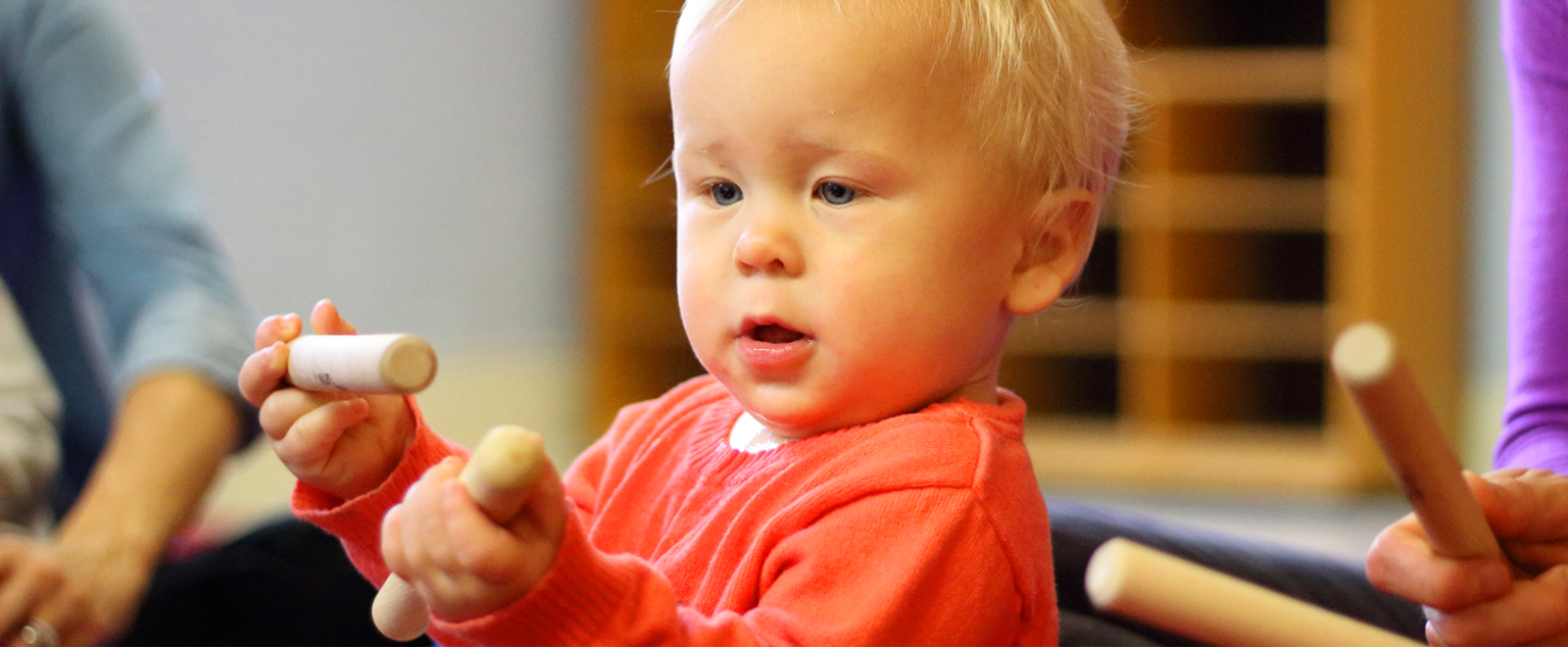
My music studio program does this in a room designed just for music – a safe carpeted space, clean and bright with special acoustic ceiling tiles to protect delicate ears. Your child will use the finest musical instruments, all made of natural material. The music curriculum your child will be involved with, Musikgarten, incorporates a selection of music and movement activities drawn from the best of our cultural heritage. It was put together by master designers to be flexible and meet the needs of all young children.
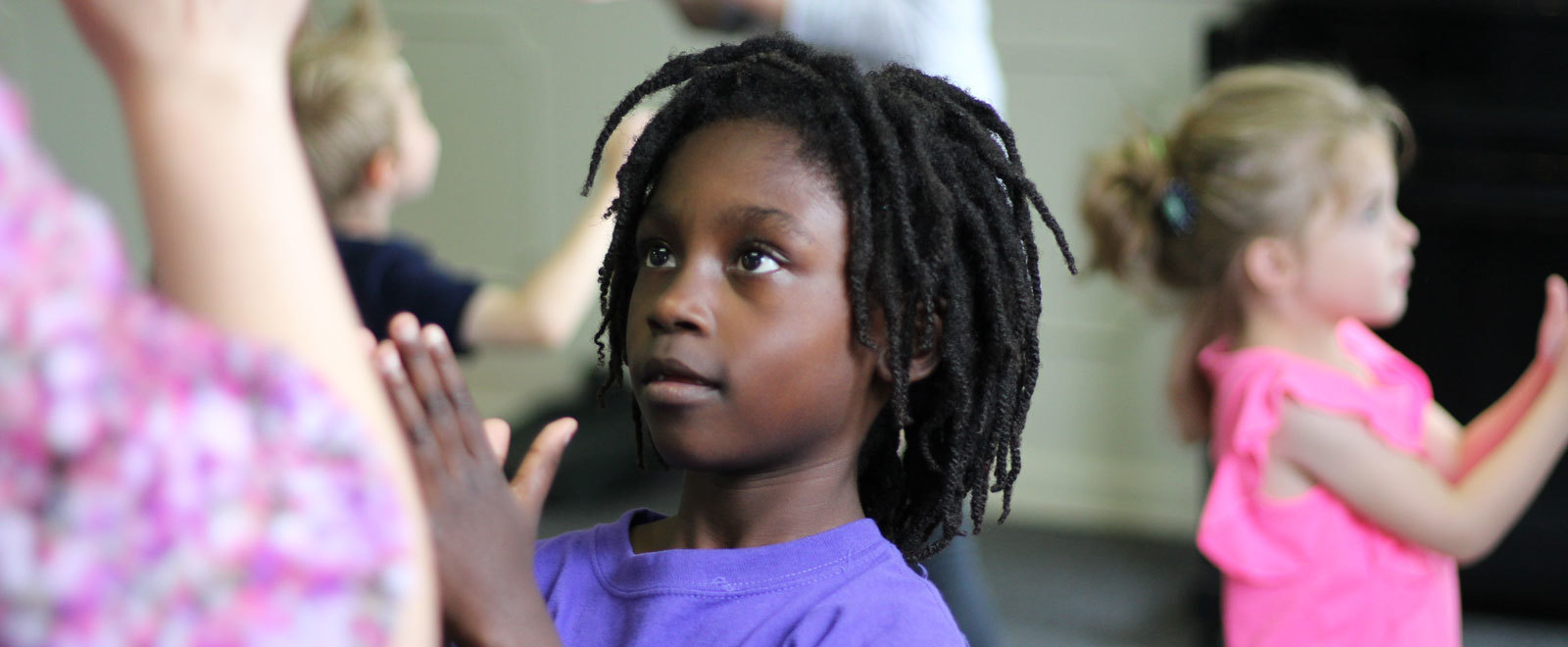
The wind whips the leaves off the lawn in one fell swoop and then are left to hang in the air before gently falling back to the earth. I envision all the activities we do in class that are based on large muscle movement – the root of all true learning experiences. The children follow the steps of musical fluency, intricately incorporated into my program and constructed to bring the children’s whole body into each music experience. Music flows from their toes to their vocal chords, movement and sound working together. It extends out from the mind to the tips of their fingers as they reach toward a keyboard or drum to play the music that they hear in their head.
A child wants to play in the pile of leaves left by my driveway. The parent throws the leaves in the air as the child jumps in the leaves. This parent/child relationship is integral to the development of the child. A weekly music class provides you with a weekly parent/child time where you can rock, sing, clap, hug, roll, laugh and learn with your child. Every activity in class is an opportunity for you and your child to share a special moment that can be reproduced at home creating lasting memories. You get to share lots of imaginative, music-based activities, real music instruments, and a chance to share with music with your child.
I hope you will come out and join us in music class as we turn away from warm beach weather towards the brisk air of fall. Experience a whole life experience which music affords us. It will permeate throughout your family’s life. This certainly is the gift of music.
- Ellen Johansen , Musikgarten instructor, East End pianist and piano teacher, and owner of the Ellen Johansen music Studio since 1992.
Children are happy when you give them what they need. A quality music and movement program fulfills many of these needs. A schedule of classes and a registration form is on the back of this newsletter. Choose a class and join us today!
My name is Ellen Johansen and I invite you and your family to join music classes at the Ellen Johansen Music Studio. For over 30 years I have taught music to children and adults. My studio offers musical opportunities for all ages. My children's classes follow the Musikgarten curriculum. Musikgarten is a high quality music and movement program that mixes musical fun along with steps towards musical literacy. Research has shown that we are all born with an aptitude for music, but that aptitude diminishes if it is not actively nurtured between the ages of birth and nine. My schedule includes early childhood music classes specifically created for toddlers and pre-school children, pre-piano classes for Kindergarten and first grade children and group piano lessons for children ages 7 - 9. I also offer Private piano lessons for older children as well as adults. I also offer an adult group piano class. You can scroll down this page to see my latest schedule of classes. All of my children's music classes are family centered and limited to 4 – 8 children in a class.
I hope you come for the fun, and stay for the education!
Sincerely,
Ellen Johansen
Teacher and Owner
631-324-9648
|